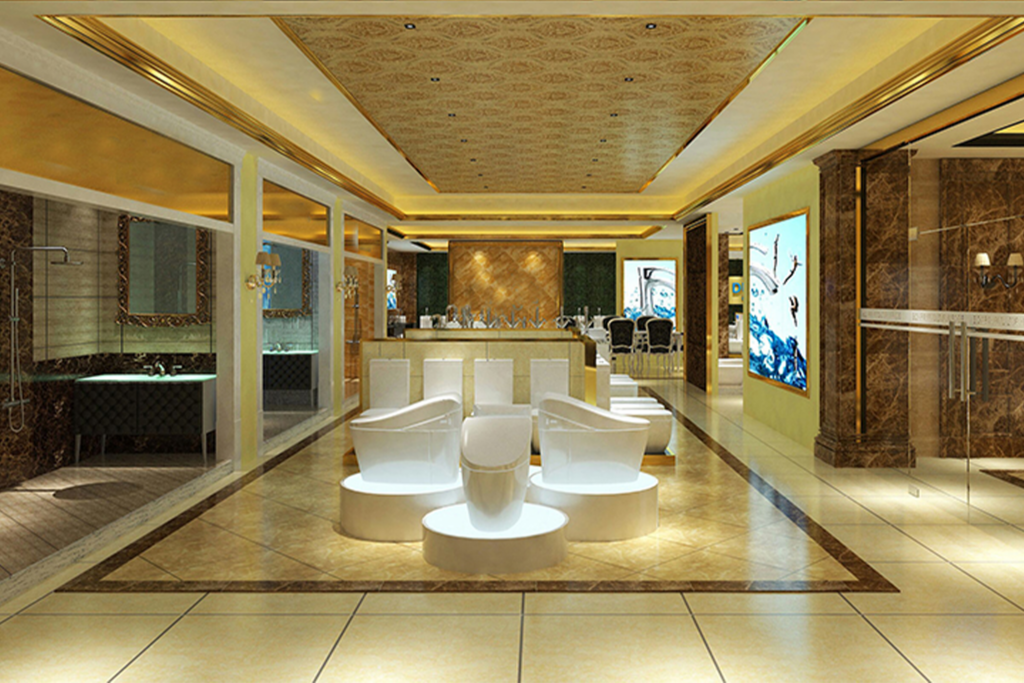
Ceramics have been an essential part of human civilization for centuries, evolving into sophisticated products that combine durability, aesthetics, and functionality. In modern times, the ceramic manufacturing process has become highly refined, ensuring premium-quality products that stand the test of time. This article explores the step-by-step manufacturing process of commode toilets, basins, and other ceramic products, from raw materials to final inspection.
Ceramic Features: Strength Through Heat
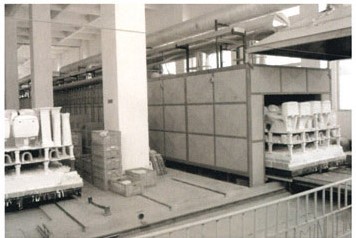
One of the defining characteristics of ceramic products is their ability to withstand extreme conditions. Heated at a scorching 1280°C, ceramics become fully vitrified, making them highly resistant to wear, extreme temperatures, and water absorption. This process ensures that ceramic items maintain their quality and appearance even after prolonged use.
Another crucial aspect of modern ceramic manufacturing is the use of an imported special glaze formula. This glaze enhances the smoothness and delicacy of the surface while improving resistance to stains and scratches, making commode toilets and basins easy to clean and maintain.
Understanding Ceramic Composition
The production of ceramic sanitaryware begins with a careful selection of raw materials, which can be categorized into two main components:
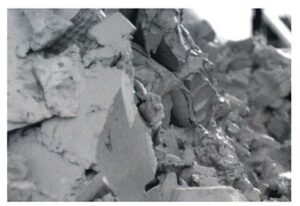
A. Porcelain Clay and Glaze
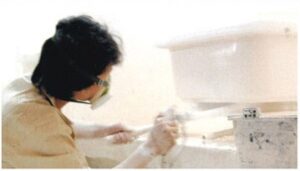
Though they share similar base elements, differences in their composition dictate their function. The main ingredients include feldspar, quartz, zinc oxide, zirconium oxide, aluminum powder, magnesium oxide, and various colorants.
B. Pottery Clay
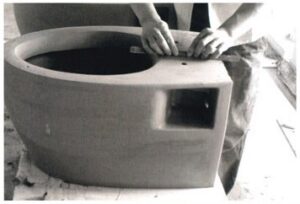
A specific type of clay used for making both pottery and porcelain.
Step-by-Step Ceramic Production Process
1. Raw Material Processing
The manufacturing process begins with ball milling, screening, iron removal, and pool storage. The raw materials must pass through a fine 325-mesh screen, meeting national standards for quality and consistency.
2. Molding and Shaping
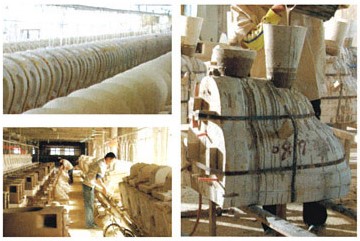
Molds are made using high-quality gypsum powder, which has excellent water absorption and short solidification time. The production process includes:
- 3D drawing and artificial sculpting of the original mold.
- Creation of a master mold using resin.
Production of sub-molds used for forming and grouting. A single mold can be used 80-120 times before requiring replacement.
3. Forming the Product
The raw material slurry is poured into the gypsum mold, forming a semi-finished ceramic product. Each molded product typically consists of multiple modular components. The primary forming methods include:
- Single-sided slurry suction
- Double-sided slurry suction
Once shaped, the product undergoes demolding, splicing, and surface refinement before proceeding to the next stage.
4. Glazing Process
To enhance aesthetics and durability, a glaze is evenly applied to the semi-finished ceramic product using either robotic or manual spraying techniques.
5. High-Temperature Firing
The glazed semi-finished product is fired at extremely high temperatures within specialized kilns. This process consists of:
- Preheating Zone
- Firing Zone
Cooling Zone
6. Quality Inspection
Ensuring high product standards involves thorough inspections across multiple checkpoints:
R&D Room: Tests raw materials for slurry consistency, strength, shrinkage, bending resistance, and thermal stability.
Quality Inspection Room: Checks for size accuracy, flush functionality, packaging quality, and overall product improvements.
Random Spot Checks: Before products are sent to storage, random samples are tested to ensure consistency in quality.
Quality control teams look for specific imperfections that could affect the final product. Some of the key defect terms include:
Glaze Bubble: Small raised areas (<1mm) on the surface.
Blister: Raised areas ranging from 1mm to 3mm.
Large Blister: Surface protrusions exceeding 3mm.
Pinholes: Tiny holes in the glaze (<1mm).
Pits: Larger holes in the glaze (>1mm).
Specks: Small color variations (<1mm), often ignored unless dense.
Spots: Heterochromatic spots, categorized by size (1-6mm).
The ceramic manufacturing process is a blend of art and science, requiring precision at every step to achieve the perfect balance of strength, beauty, and durability. From raw material selection to high-temperature firing and rigorous quality inspections, every stage contributes to producing premium ceramic products like commode toilets and basins that stand the test of time.
Whether in homes, offices, or public spaces, ceramic sanitaryware remains a cornerstone of modern living, offering both aesthetic appeal and unmatched functionality. As technology advances, the future of ceramic production will continue to innovate, delivering even higher standards of excellence.